
Coconino County Divorce Decree Records
Divorce decrees in Coconino County are kept by the Clerk of the Superior Court in Flagstaff. This northern Arizona county covers over 18,000 square miles and includes Flagstaff, Sedona, and parts of the Grand Canyon. The Superior Court handles all dissolution of marriage cases filed in Coconino County. Deborah Young serves as the current Clerk of the Superior Court. She oversees record keeping for all court cases in Coconino County. You can get divorce decree records by visiting the clerk office in person, mailing a request, or using online portals for some documents. The office is at 200 North San Francisco Street in downtown Flagstaff and operates on weekdays from 8:00 in the morning to 5:00 in the afternoon.
Coconino County Quick Facts
Coconino Superior Court Clerk
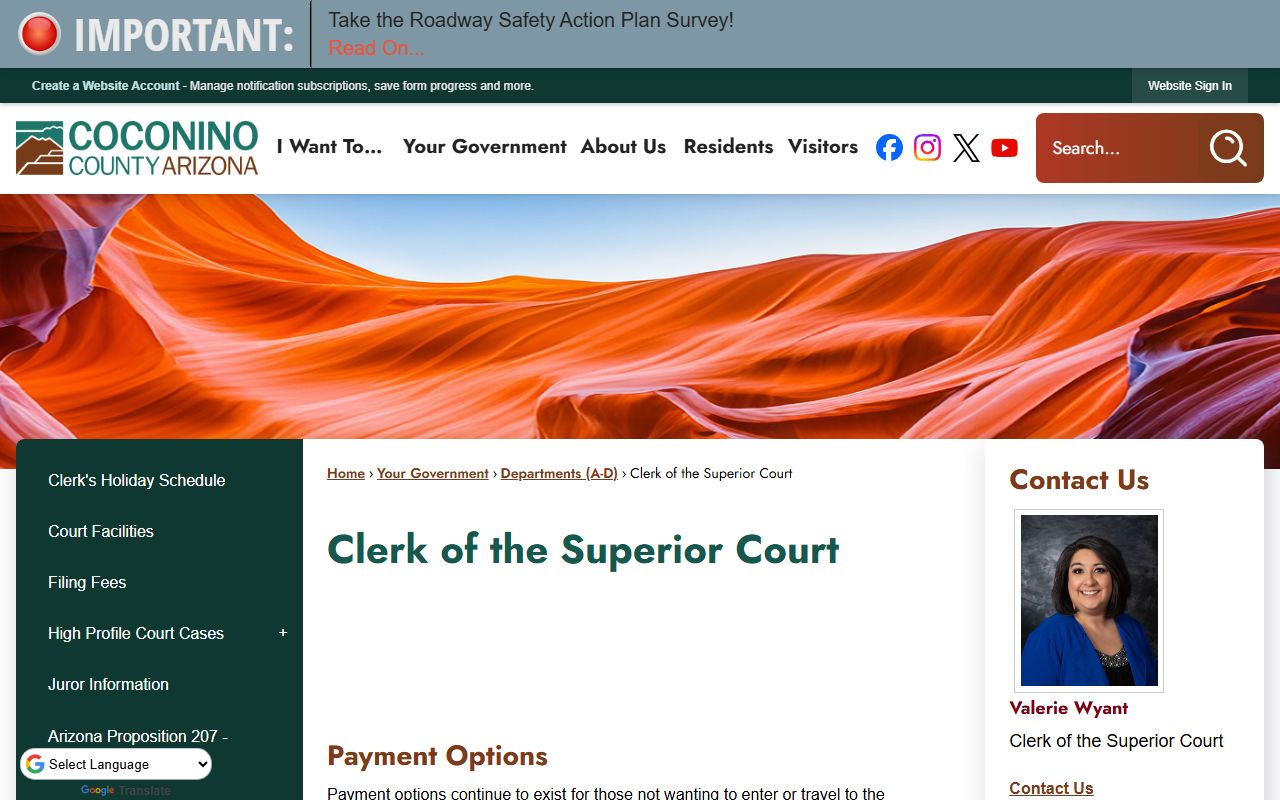
The Clerk of the Superior Court in Coconino County is the official keeper of all divorce decree records filed in this jurisdiction. This office handles record storage, public access requests, and document certification. The clerk processes hundreds of divorce cases each year. Staff can help you find old decrees and new ones alike.
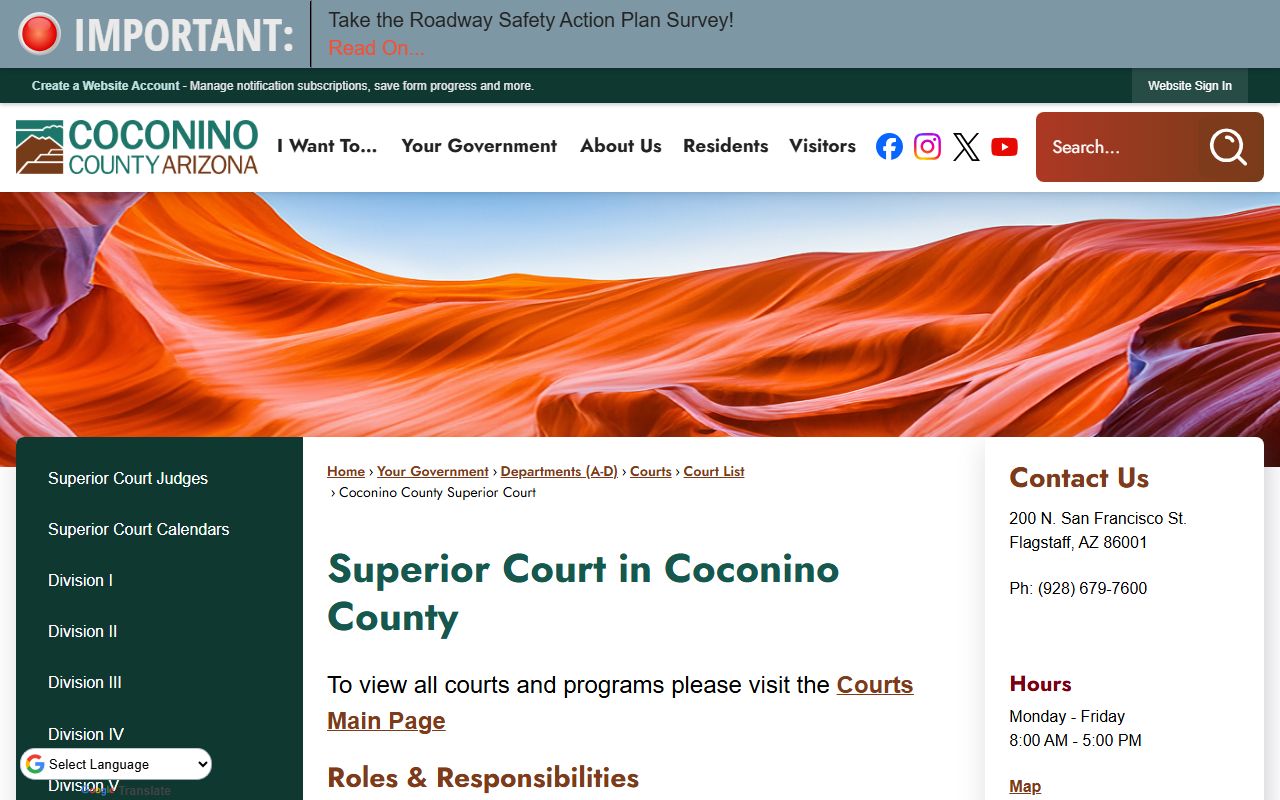
Coconino County operates one main courthouse location for the Superior Court in Flagstaff. The building sits in the heart of downtown near City Hall and the county administration complex. Parking is available on nearby streets and in public lots. All divorce decree filings for Coconino County are stored at this location regardless of where in the county the parties lived. This includes cases from Flagstaff, Sedona, Williams, Page, and Fredonia. Older records may be in off-site storage and can take extra days to retrieve.
The official Coconino County Clerk of the Superior Court page provides contact information and office hours. You can reach the office by phone at (928) 679-7600 or toll-free at 877-679-7120. The clerk staff can answer questions about how to request divorce decree copies, what fees apply, and how long it takes to process your request. Call ahead if you plan to visit in person so staff can confirm the records you need are on-site.
| Office | Coconino County Clerk of the Superior Court |
|---|---|
| Clerk | Deborah Young |
| Address |
200 N. San Francisco Street Flagstaff, AZ 86001 |
| Phone | (928) 679-7600 |
| Toll-Free | 877-679-7120 |
| Hours | Monday through Friday, 8:00 AM to 5:00 PM |
Search Coconino Divorce Decrees Online
Coconino County provides several online options for finding and accessing divorce decree records. The Arizona Public Access system covers Coconino County Superior Court cases. This free portal lets you search by party name or case number. You can view basic case information like filing dates and case status. The system does not show full document text, but it helps you confirm what records exist before you request copies.
The Arizona eAccess portal offers document downloads for cases in Coconino County. Visit azcourtdocs.gov to access this service. After you create an account, you can search for divorce cases. The portal shows a list of all documents filed in each case. Pick the divorce decree or any other paper you need. The system charges $10 per document download. This is a quick way to get unofficial copies without visiting the courthouse in person. Payment is by credit card and documents come as PDF files.
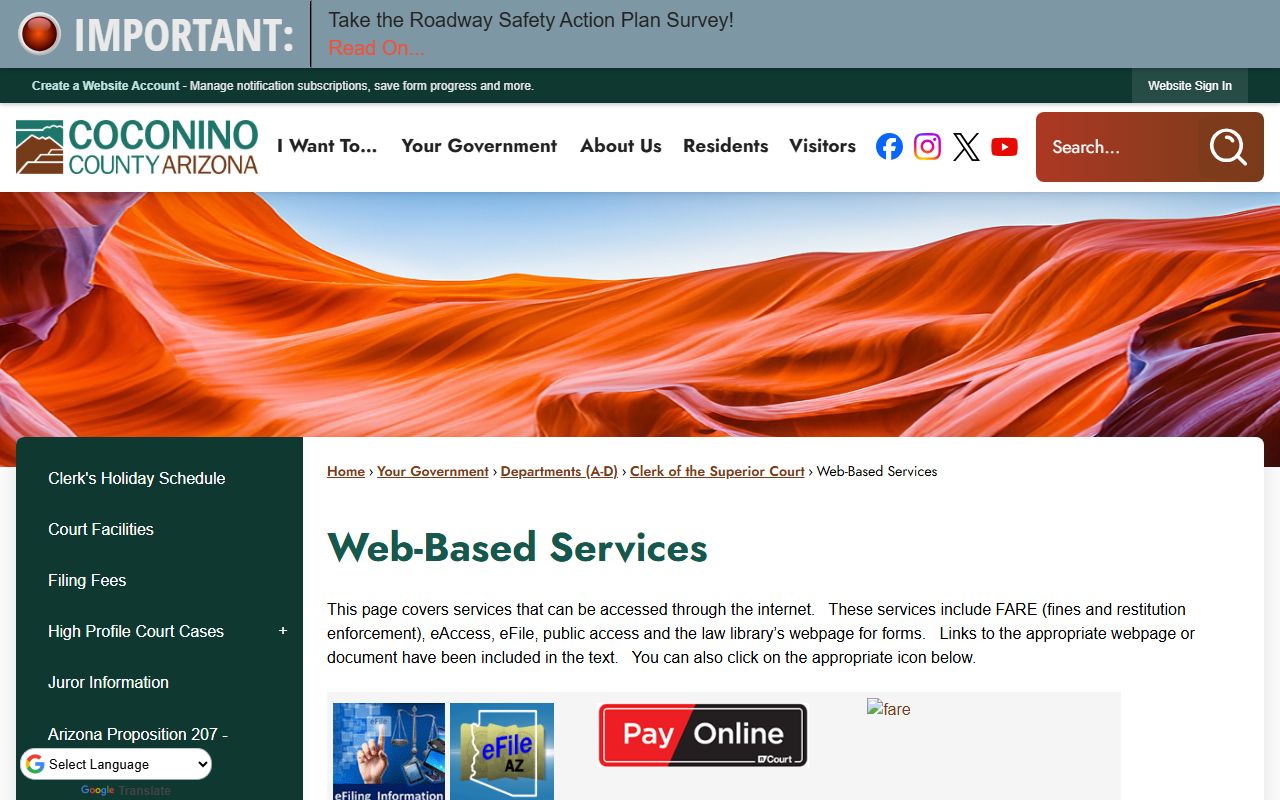
Coconino County also maintains web-based services for court users. These online tools include case lookup features and information about court procedures. Some services require registration while others are open to all users. Check the county website to see what options are available for the type of record you need. Online access is convenient but may not include all historical records from decades ago.
Note: Online records may not include cases that are sealed or restricted by court order.
Fees for Divorce Decree Copies
Coconino County charges set fees for divorce decree copies and related services. Copy fees are 50 cents per page for plain photocopies. A typical divorce decree runs 5 to 10 pages. Expect to pay $2.50 to $5.00 for an uncertified copy of just the decree itself. The full case file can be much longer if you request all documents from the divorce case.
Certification fees in Coconino County range from $28 to $30 per document depending on the type of certification needed. A certified copy has a raised seal and the clerk's signature. Many agencies require certified copies as legal proof of the divorce. Banks, government offices, and courts often ask for certification when you change your name or update records after a divorce. The certification fee is charged per document, not per page, so a 10-page certified decree costs the same certification fee as a one-page order.
If you request records by mail, add postage and handling fees to your total. Coconino County charges about $7.00 for mailing service. This covers the envelope, postage, and staff time to process mail requests. Payment can be made by money order, cashier's check, or credit card. Personal checks may not be accepted for some services. Call the clerk office at (928) 679-7600 to confirm current fees before you send payment. Fee amounts can change when the county updates its fee schedule.
The eAccess portal charges its own separate fee of $10 per document download. This is in addition to county fees if you later need a certified copy from the clerk. Online downloads are not certified. For official certified copies, you must contact the Coconino County clerk office directly by phone, mail, or in-person visit.
How to Get Divorce Decree Records
You have three main ways to request divorce decree records from Coconino County. Each method works well for different situations. In-person visits give you the fastest results. Mail requests work if you live far from Flagstaff. Online options let you get basic records without leaving home.
For in-person requests, go to the clerk office at 200 North San Francisco Street in Flagstaff during business hours. Bring a photo ID with you. Tell the clerk staff what case you need. Give them the case number if you have it. If not, provide the full names of both spouses and the approximate year the divorce was finalized. Staff will search the records and make copies for you. Pay the fees at the counter. You can often get your copies the same day unless the file is in off-site storage. Certified copies are available immediately for most cases.
To request records by mail, write a letter to the Coconino County Clerk of the Superior Court at the address listed above. State what records you need. Include the case number or the names of both parties. Say whether you need plain copies or certified copies. Provide your return mailing address and a phone number in case staff have questions. Send payment in the form of a money order or cashier's check. Allow 5 to 10 business days for processing after the clerk receives your request. Mail requests take longer than in-person visits but work well if you cannot travel to Flagstaff.
Online requests can be made through the eAccess portal for unofficial copies. Log in at azcourtdocs.gov and search for your case. Download the documents you need for $10 each. This works well for recent cases that are in the online system. Older cases may not be available online and will require an in-person or mail request to the clerk office instead.
What Coconino Divorce Decrees Contain
A divorce decree from Coconino County Superior Court is the final order that ends a marriage. The judge signs it after reviewing the case or approving a settlement between the parties. The decree states that the marriage is dissolved. It includes the date the dissolution becomes final. Both spouses are named in the decree along with their addresses at the time of filing.
If the couple has children, the decree includes custody terms. Arizona uses the term "legal decision-making" instead of custody. The decree says which parent makes major decisions about the child's education, health care, and religious upbringing. It also has a parenting time schedule that shows when the child stays with each parent. Child support amounts appear in the decree if one parent must pay support. The decree lists how much, how often, and how long the payments continue.
Property division is spelled out in the divorce decree. Arizona is a community property state. Assets and debts from the marriage are divided between the spouses. The decree lists what property each person gets. This can include homes, cars, bank accounts, retirement funds, and personal items. Debts like mortgages, credit cards, and loans are also assigned. Each spouse is responsible for the debts listed in their name on the decree.
Spousal maintenance, also called alimony, may be included in the decree if one spouse will pay support to the other. The decree states the amount, how often it is paid, and how long it lasts. Not all divorces include spousal maintenance. It depends on the length of the marriage, the income of each spouse, and other factors.
The full case file holds more than just the final decree. It starts with the petition for dissolution. The other spouse files a response. There may be temporary orders for support or custody while the case is pending. Financial disclosures show income, assets, and debts. Settlement agreements are filed if the parties reach a deal. Court minutes describe what happened at hearings. All of these papers are part of the divorce record and can be requested from the clerk.
Arizona Dissolution Laws in Coconino County
Arizona uses "dissolution of marriage" as the legal term for divorce. The state has a no-fault system. You do not need to prove your spouse did something wrong. The only ground required is that the marriage is irretrievably broken. This means there is no reasonable chance of fixing the relationship. One spouse can claim this even if the other disagrees.
To file for dissolution in Coconino County, at least one spouse must have lived in Arizona for 90 days before filing. This residency rule is shorter than in many states. You file the petition at the Superior Court in the county where either spouse lives. Service of the petition must be made on the other spouse. They have a set time to respond. If both parties agree on all terms, the case can move quickly through a consent decree.
Arizona law divides property based on community property rules. Everything acquired during the marriage belongs to both spouses equally. The court divides it fairly, which usually means a 50-50 split. Separate property stays with the person who owns it. Separate property includes what you had before marriage, gifts to you alone, and inheritances you received. The divorce decree must clearly state what is community and what is separate.
Coconino County Superior Court follows all Arizona statutes for dissolution cases. Judges apply state law when they make decisions about custody, support, and property. Local court rules may add requirements for how you file papers or schedule hearings, but the basic legal standards come from state law. The Arizona Revised Statutes contain the dissolution laws that apply in Coconino County and all other Arizona counties.
Older Divorce Decree Records
Divorce decrees from many years ago are still available from Coconino County. The clerk office has records going back to when the county was formed in 1891. Very old records may be stored off-site or on microfilm. It can take extra time to retrieve these files. Call ahead if you need a decree from decades ago so staff can check where the record is located.
The Arizona State Archives also holds some historical divorce records from Coconino County. Their collection includes court records from the 1800s and early 1900s. For cases before 1950, you may want to check with the State Archives in addition to the county clerk. The Archives has indices that let you search by name. Their website at azsos.libguides.com has information about their holdings and how to request copies of old records.
Records from the 1960s and 1970s are typically at the Coconino County clerk office but may not be digitized. You may need to visit in person or make a mail request for copies. Staff can search paper files and microfilm to locate cases from this time period. Allow extra processing time for requests of very old divorce decrees.
Legal Resources in Coconino County
Several organizations offer help with divorce cases in Coconino County. Arizona Court Help is a statewide website at azcourthelp.org. It has forms, guides, and instructions for people who are handling a divorce without a lawyer. The site is free to use any time. You can download petition forms, find out how to serve your spouse, and learn about court procedures.
Community Legal Services has an office in Flagstaff that serves Coconino County. They provide free legal help to low-income residents. Their focus areas include family law matters like divorce. Call them to see if you qualify based on your income. Their Flagstaff office can be reached through the main intake line for northern Arizona legal aid services.
The Coconino County Superior Court has a self-service center for people representing themselves. Staff at the center can answer questions about forms and court procedures. They cannot give legal advice, but they can help you understand what papers to file and how the court process works. The center is located at the courthouse in Flagstaff. Check with the court to confirm current hours before you visit.
If you need to hire a lawyer, the State Bar of Arizona has a lawyer referral service. They can connect you with attorneys who handle divorce cases in Coconino County. The referral service charges a small fee for the first consultation. You can also search for lawyers on your own through online directories or local bar association listings.
Other Coconino County Agencies
Besides the Superior Court clerk, other county offices may have records related to divorce cases. The Coconino County Recorder maintains property records. After a divorce decree is signed, property transfers often get recorded with this office. If your divorce involved a home or land, check with the recorder to see if deeds were filed to transfer ownership. Their office is separate from the court clerk.
The Coconino County Attorney's Office handles child support enforcement. If your divorce decree includes a child support order and you have problems with payments, this office can help. They work with the state Division of Child Support Services to collect unpaid support. Contact them if you need to enforce or modify a support order from your divorce case.
For marriage licenses, contact the Coconino County Clerk's office. Marriage records are separate from divorce records but sometimes you need both. You may need your marriage license when you file for divorce, or you may need proof of marriage before you can get a divorce decree copy. The clerk can provide information about how to get marriage records from Coconino County.
Cities in Coconino County
Coconino County includes several cities and towns across northern Arizona. All divorce cases filed by residents of these communities go through the Coconino County Superior Court in Flagstaff. The county covers a large geographic area but has only one courthouse location for the Superior Court.
Other communities in Coconino County include Sedona, Williams, Page, Fredonia, and Tusayan. Residents of these areas file for divorce at the Coconino County Superior Court in Flagstaff. The court serves all parts of the county regardless of how far you live from the courthouse.
Nearby Counties
These counties border Coconino County. If you are not sure which county has jurisdiction over your divorce case, check the address where you or your spouse lived when the case was filed. You must file in the county where at least one spouse resides.