
Santa Cruz County Divorce Decree Records
Divorce decrees in Santa Cruz County are maintained by the Clerk of the Superior Court located in Nogales. The clerk office acts as the official custodian of all court records for dissolution of marriage cases filed in Santa Cruz County. Records date back to when the county was established and continue through present-day filings. Multiple access options exist for obtaining divorce decree documents. You can search case information online through statewide portals, visit the clerk office in person at the courthouse, or submit a written request by mail. The clerk office also offers an online portal specific to Santa Cruz County for case searches and document access.
Santa Cruz County Quick Facts
Santa Cruz Superior Court Clerk Office
The Clerk of the Superior Court in Santa Cruz County serves as the official record keeper and financial officer for the court. This office maintains all divorce decree records for cases filed in the county. The physical location is at 2160 North Congress Drive, Suite 2300, in Nogales, Arizona 85621. Office hours are weekdays with closures on weekends and state holidays. The main phone number for the clerk office is 520-375-7700. For general Superior Court matters, you can also call 520-375-7300.
Staff at the clerk office can assist with questions about how to obtain divorce records, what fees apply, and whether a specific case is on file. They handle walk-in requests, phone inquiries, and mail requests. If you know your case number, the process moves faster. If you do not have the case number, the staff can search by party names and approximate divorce date, though there may be a search fee.
Santa Cruz County offers an online court portal where you can search for cases and access certain information. This portal is specific to Santa Cruz County and provides an alternative to the statewide Arizona Public Access system. The portal may have additional features or more detailed case information for local cases.
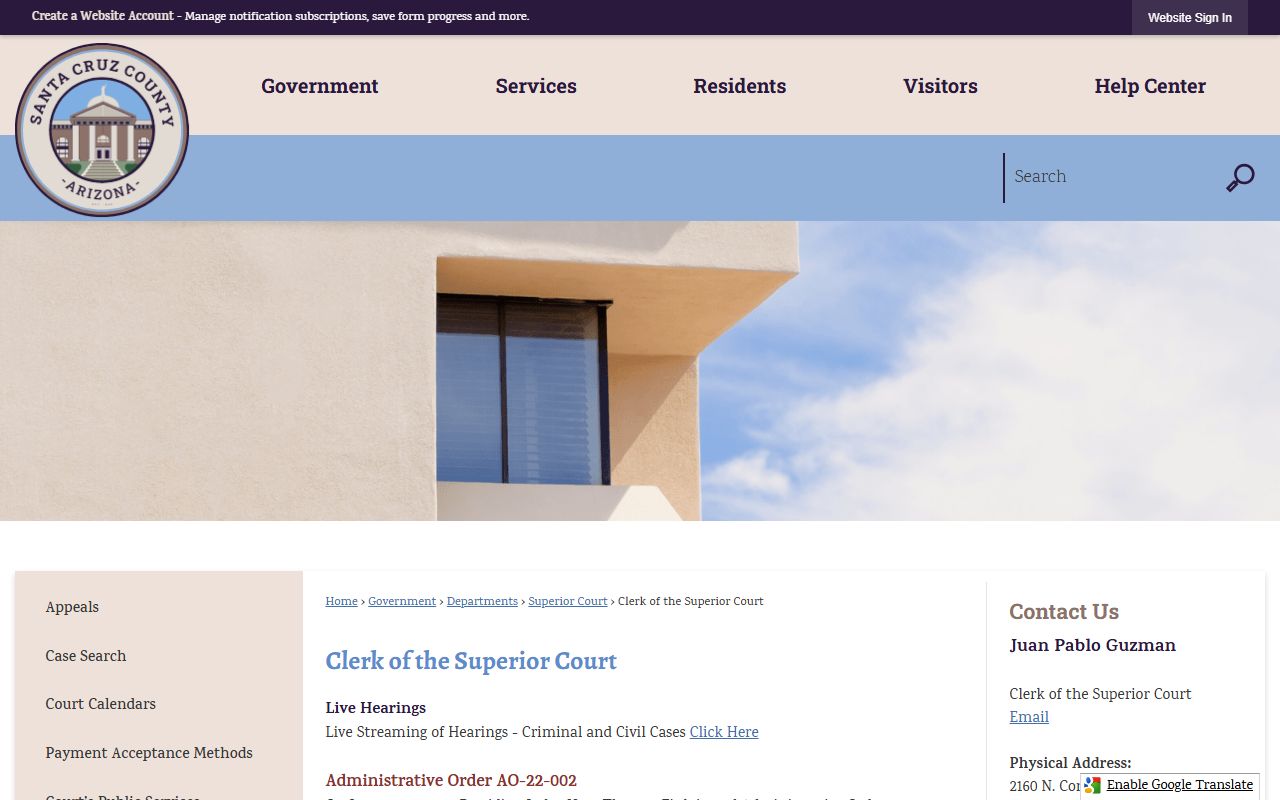
The official clerk website provides contact information, fee schedules, and links to online resources. It also has information about other clerk services such as marriage licenses and civil case filings. Check the website before visiting to confirm current office hours and any changes to procedures.
Find Divorce Cases Online
Three main online systems help you find Santa Cruz County divorce cases. The first is the Arizona Public Access system at apps.azcourts.gov/publicaccess/caselookup.aspx. Select Santa Cruz County from the list. Search by party name, case number, or attorney. The results show basic case info such as filing date, case type, and status. This is a free tool.
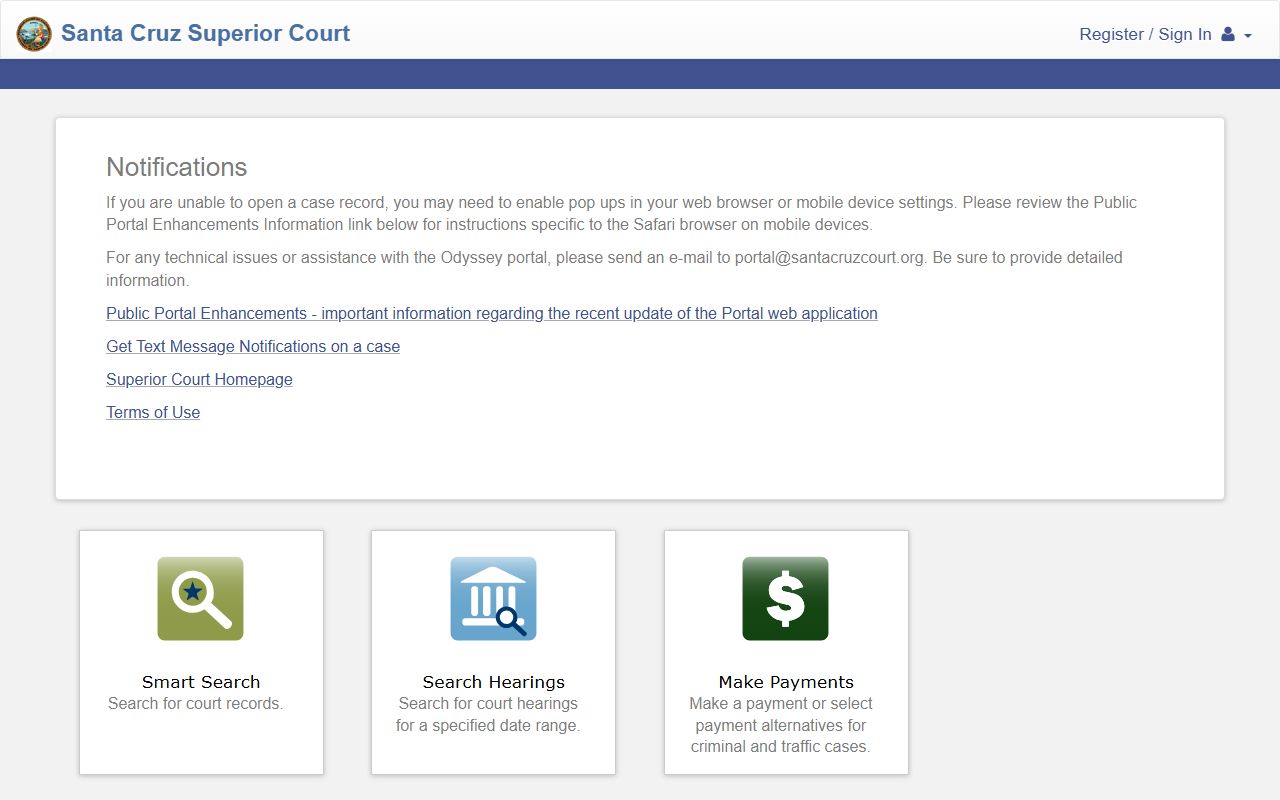
The second option is the Santa Cruz Superior Court Portal. This local system may have more detailed case information than the statewide portal. You can search for cases and view docket entries. Some documents may be available for viewing depending on the case type and how the county has configured the system. Creating an account may give you access to additional features.
The third option is the Arizona eAccess portal at azcourtdocs.gov/arizona. This statewide system lets you download court documents for a fee of $10 per document. Search for the case by name or number. Once you locate it, you see a list of all filed documents. Click on the final divorce decree or any other document you need. Pay by credit card and download the PDF. This system is useful when you need a document quickly and cannot visit the courthouse.
Divorce Record Copy Fees
Santa Cruz County charges 50 cents per page for copies of court records. A typical divorce decree runs 5 to 15 pages. You can expect to pay $2.50 to $7.50 for an uncertified copy of just the final decree. If you need a certified copy, there is an additional fee for the clerk's certification. While the exact certification fee should be confirmed with the clerk office, most Arizona counties charge between $30 and $35 for this service.
The full divorce case file contains more than the final decree. It includes the petition, response, financial affidavits, settlement agreements, and other filings. A complete file might be 50 to 200 pages depending on how complex the case was. At 50 cents per page, a 100-page file costs $50 for copies. Add the certification fee if you need certified copies of specific documents such as the decree or settlement agreement.
If the clerk office needs to search for your case because you do not have a case number, there may be a research or search fee. This varies by county but is often around $35. If you request records by mail, you may also pay a postage and handling fee of about $8. Call the clerk office at 520-375-7700 before submitting a request to get the exact fee total. This ensures you send the correct payment amount and avoid delays.
Payment methods include money orders, cashier's checks, and credit cards. Personal checks may not be accepted. If you visit in person, you can pay with cash, debit card, or credit card at the clerk counter. For mail requests, include a money order or cashier's check made out to the Santa Cruz County Clerk of the Superior Court.
Ways to Get Divorce Decree Copies
You can obtain divorce decree records from Santa Cruz County in three main ways. The first is an in-person visit. Go to the courthouse at 2160 North Congress Drive, Suite 2300, in Nogales. Bring a photo ID. Tell the clerk staff the case number or the names of both spouses and the approximate year of the divorce. The staff will locate the file and make copies for you. You pay the fees at the counter and often receive the copies right away.
The second method is a mail request. Write a letter to the Clerk of the Superior Court at 2160 N. Congress Dr., Suite 2300, Nogales, AZ 85621. Include the case number if you have it. If not, provide the full legal names of both parties and the estimated divorce date. State whether you want regular copies or certified copies. Include your full mailing address and a money order or cashier's check for the fees. It helps to call first to confirm the fee amount. Processing time is typically 5 to 10 business days after they receive your request and payment.
The third method uses online tools. Search for the case on the Santa Cruz portal or Arizona Public Access to get the case number. Then use the Arizona eAccess system to download documents for $10 each. This is the fastest option if you need a copy quickly and do not require certification. However, online downloads are not certified copies. If you need a certified copy for legal purposes such as remarriage or immigration, you must request it from the clerk office directly.
How Divorce Cases Work in Santa Cruz County
To file for dissolution of marriage in Santa Cruz County, at least one spouse must have lived in Arizona for 90 days prior to filing. You file the petition at the Superior Court Clerk office in Nogales. Arizona is a no-fault state, so you only need to state that the marriage is irretrievably broken. You do not have to prove wrongdoing or assign blame.
After the petition is filed, the other spouse must be served with the court papers. They have 20 days to respond if served in Arizona, or 30 days if served outside Arizona. If both spouses agree on all terms, the case can proceed as a consent decree. This is faster and less expensive than a contested divorce. The court reviews the agreement and issues the final decree if it meets legal requirements and is fair to both parties.
If the spouses disagree on issues like property division, child custody, or spousal maintenance, the case becomes contested. There may be hearings, mediation sessions, and possibly a trial. The judge makes decisions on disputed issues. Once all matters are resolved, the judge signs the final decree. This decree is the legal document that ends the marriage and sets out binding terms for property, support, and custody.
Santa Cruz County uses standard Arizona court forms. You can get forms and instructions from azcourthelp.org. This is the official self-service website for Arizona courts. It has forms for filing a petition, responding to a petition, requesting temporary orders, and modifying existing decrees. The site also has videos and flowcharts that explain the divorce process step by step.
The clerk office in Santa Cruz County also mentioned a service called TurboCourt. This is an online form preparation tool. For a fee of $15, you can complete an intelligent questionnaire and the system generates the court forms you need. This can be helpful if you find the standard forms confusing. However, it is not required. You can download free forms from azcourthelp.org and fill them out yourself.
Legal Assistance and Self-Help Resources
Several resources are available if you need help with a divorce case in Santa Cruz County. The main self-service resource is azcourthelp.org. This website has forms, instructions, videos, and guides that cover the entire divorce process. It is free to use and available any time. The site cannot give you legal advice about your specific situation, but it can help you understand court procedures and what forms to file.
If you need legal advice or representation, you may qualify for help from a legal aid organization if your income is low enough. Community Legal Services is a nonprofit that provides free legal help to low-income Arizona residents. They have offices in Phoenix, Tucson, and Flagstaff. They may be able to help with Santa Cruz County cases depending on their current caseload and funding. Call them to ask about eligibility and whether they can take your case.
The State Bar of Arizona runs a lawyer referral service. You can call them and explain what type of legal help you need. They will refer you to an attorney in your area who handles family law cases. The first consultation may be free or at a reduced rate. After that, you would hire the attorney and pay their normal fees. This is a good option if you need professional help but do not qualify for free legal aid.
The Superior Court may have a self-service center where staff can answer procedural questions. They cannot give legal advice, but they can help you understand what forms to use and how to file them properly. Call the court at 520-375-7300 to ask about self-service resources and whether walk-in help is available. Smaller counties like Santa Cruz may have limited staffing for self-help services compared to large urban counties.
Public Records and Confidentiality
Divorce decrees are public records in Santa Cruz County. This means anyone can request and receive copies. You do not have to be one of the spouses in the case. You do not need to give a reason for wanting the record. The clerk office processes all records requests the same way regardless of who is asking or why.
Some information may be restricted to protect privacy or safety. Cases involving domestic violence allegations sometimes have protective orders that seal certain details. Financial account numbers and Social Security numbers are often redacted from public copies to prevent identity theft. Information about minor children may also be limited in some cases. However, the final divorce decree itself is almost always public and contains the basic terms such as property division and custody arrangements.
If an entire case is sealed by court order, the clerk cannot provide copies to the public. Only the parties in the case or people with a court order can access sealed records. This is rare. Most divorce cases are not sealed. If you request a case and are told it is sealed, you would need to file a motion with the court asking for access and explain why you need it.
About Santa Cruz County Records
Santa Cruz County was formed in 1899 and is located in southern Arizona along the border with Mexico. The county seat is Nogales, which sits directly on the international border. Most of the county's population lives in or near Nogales. Other communities include Patagonia, Rio Rico, and Tubac. All divorce cases for residents of these areas are filed at the Santa Cruz County Superior Court in Nogales.
The Superior Court handles all general jurisdiction matters in the county. This includes felony criminal cases, civil cases over $10,000, family law matters like divorce and custody, probate cases, and juvenile matters. Because it is a smaller county, Santa Cruz has fewer judges and court staff than large counties like Maricopa or Pima. This can mean more personalized service but also potentially fewer resources for things like walk-in assistance or same-day processing of requests.
Divorce decree records in Santa Cruz County date back over 100 years. Older records may be in paper format only and stored off-site. If you need a very old divorce decree, call the clerk office in advance. They may need a few extra days to retrieve the file from storage. Modern records are more likely to be available in electronic format through the county portal or the eAccess system.
Communities in Santa Cruz County
Santa Cruz County does not have any cities with a population over 50,000. Nogales is the largest community and serves as the county seat. Other towns include Rio Rico, Patagonia, and Tubac. All residents of these communities file divorce cases at the Santa Cruz County Superior Court in Nogales. There are no branch court locations, so all filings and records requests go through the main courthouse on North Congress Drive.
Nearby Counties for Divorce Records
If you are searching for divorce records and are not certain which county to check, consider these neighboring counties:
Santa Cruz County shares its northern border with Pima County, which includes Tucson. The eastern border is with Cochise County. If someone lived in one county and later moved to another, divorce records would be in the county where the case was actually filed.